


“In a car you're always in a compartment, and because you're used to it you don't realize that through that car window everything you see is just more TV. You're a passive observer and it is all moving by you boringly in a frame. On a cycle the frame is gone. You're completely in contact with it all. You're in the scene, not just watching it anymore, and the sense of presence is overwhelming.”
― Robert M. Pirsig, Zen and the Art of Motorcycle Maintenance: An Inquiry Into Values
When I purchased my bike two years ago, I vowed to take great care of it. And to be honest, I haven’t been sure where to start. Putting air in the tires was about the end of my comfort zone. But if I’m going to take myself even slightly seriously as a cycling enthusiast and blogger, then I need be able to do some basic maintenance on my bikes. It’s actually a matter of safety in many ways. The last thing you want is to be stranded on a road or trail without the skills to get yourself home or at least out of harm’s way.
I tend to be more of a hands-on learner, so instead of scouring YouTube for how-to videos, I went in search of a local class. Luckily I live in close proximity to Boulder, Colorado, one of the biggest cycling towns in the U.S. However, there were surprisingly few offerings for an entry level, in-person mechanics class.
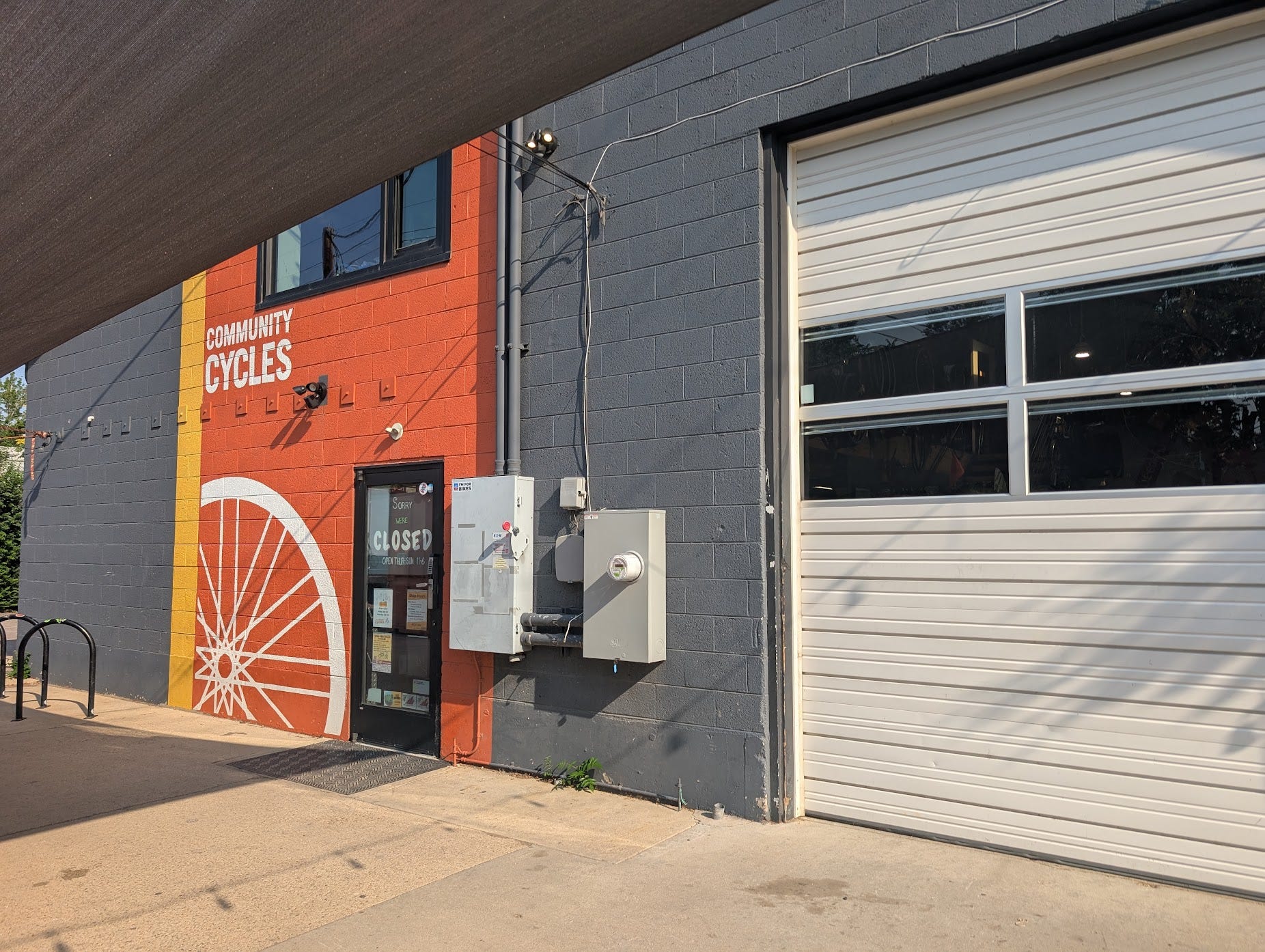
Fortunately, Google led me to Community Cycles, a Boulder non-profit. This small shop is dedicated to creating “equitable access to bicycles for everyone in our community.” Being Boulder, you might expect some hoity-toity top-of-the-line big money situation, but this is quite the opposite!
This modest shop tucked away behind a nondescript brick building is filled to the brim with refurbished bicycles for sale on one side and a huge workshop on the other. There are parts and accessories coming out of every nook and cranny. The space features reservable DIY work stations with all the bike-specific tools you probably don’t want to personally invest in. It feels a bit overwhelming at first, but you can see that it’s very smartly organized. The one caveat is you must be a member of Community Cycles to reserve a work station. But the good news is, you can get an annual membership for $70, or $6 a month. This seems like a very reasonable price for access to so many tools and on-site expertise.
The course I attended is called Maintenance 101 and it was $25 (or $15 for members). It wasn’t as hands-on as I had expected, but the instructor, Todd, did a fine job of explaining maintenance basics to the eight of us in attendance. We went over chain basics (how to clean and lube), derailleur lubrication, brakes and how to care for cable vs. hydraulic, as well as how and when to replace worn brake pads. We talked about bearings also, but I’m not sure how those relate to the regular maintenance of my bike. Because the class was only 90 minutes long, none of these areas were covered in great depth, but Todd told us they offer a six-session course that goes much deeper called the Complete Mechanic Series. It’s probably a good investment of time to attend that as well sometime down the road.
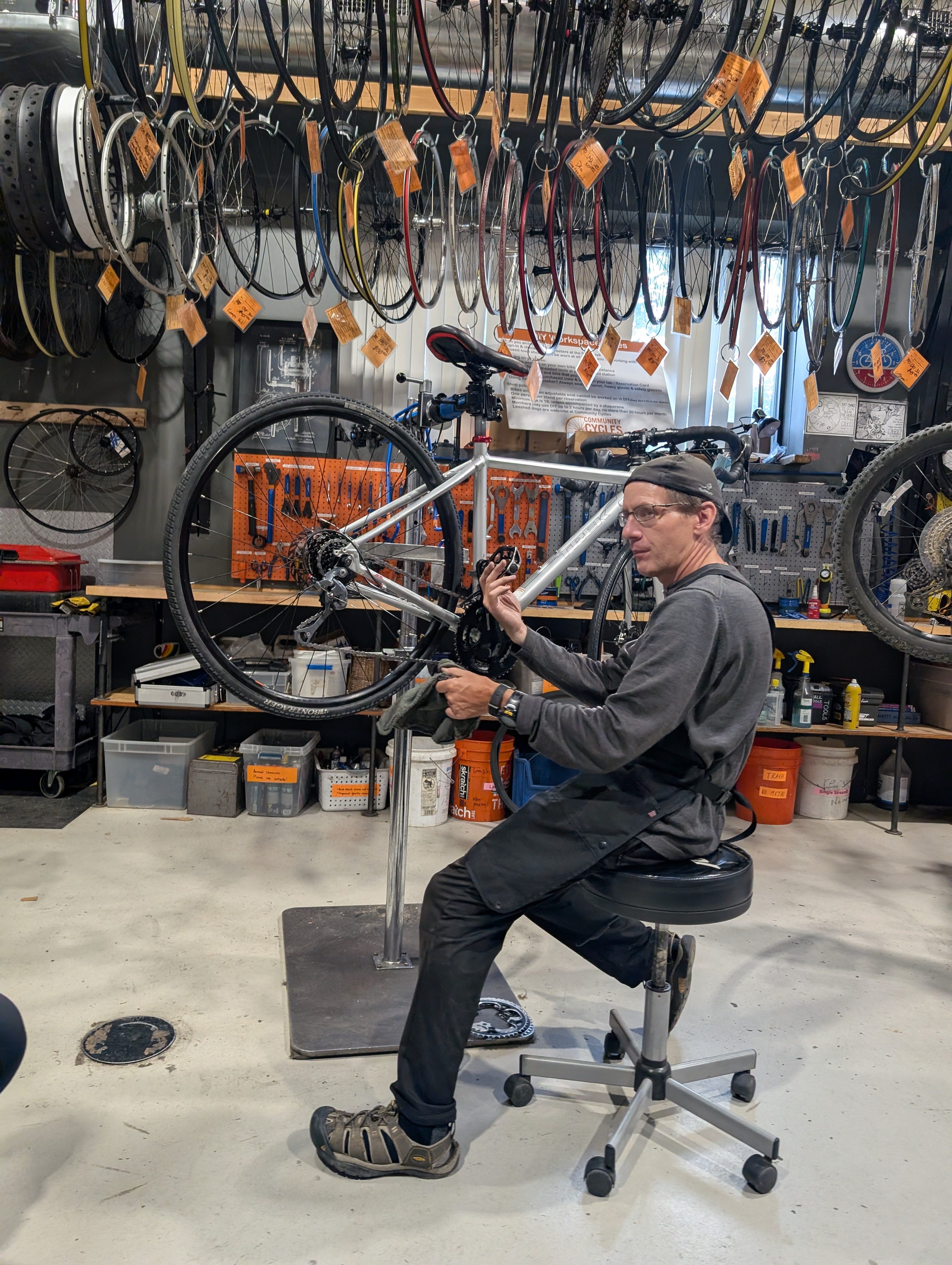
I also learned that Community Cycles has a special session once a month called GEM Night. This stands for Gender Equality Mechanics and it’s designed specifically for women and other marginalized gender groups (think LGBTQ+) to have the entire shop to themselves. It appears that this is available to anyone, even without a membership. And it looks like I didn’t need to scour YouTube for repair videos after all. Community Cycles has a helpful page of videos on all of the most common bike repairs. These are created by Park Tool, a leading manufacturer of bike repair tools. I’m definitely going to keep this page handy for when a needed repair crops up. If you personally happen to be an avid YouTube DIYer, this is their YouTube page full of even more bike repair videos.
I’m still very far from being an expert on bike maintenance, but I do feel like this was a good first foray toward better understanding. It seems as though bike parts aren’t so wildly exaggeratedly complicated that I can’t grasp how they work (despite the fact that there are so many different brands and price points). I’m also delighted to learn about this amazing community space for like-minded bike enthusiasts in my area. If you, too, want to have even just a basic level of understanding about your bike, I encourage you to look for a similar class in your community.
And, if you’ve never read Zen and the Art of Motorcycle Maintenance, it’s quite a trip! Literally and figuratively.